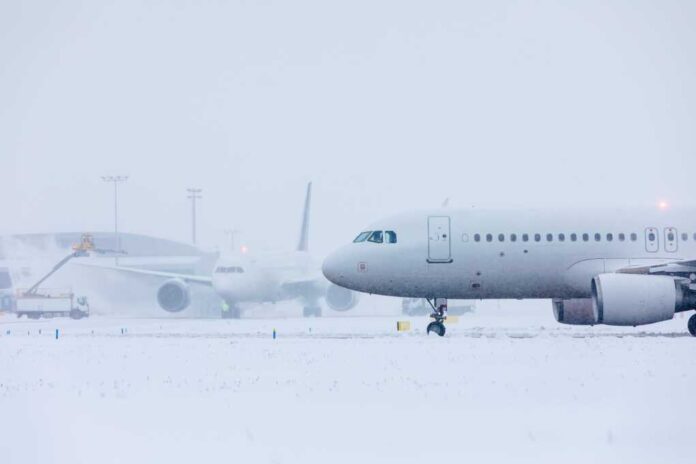
A severe Arctic cold snap, intensified by Storm Goretti, has paralyzed Western and Central Europe, triggering widespread transport disruption. With hundreds of flights and train services cancelled, and road closures due to snow and ice, the region is grappling with a deadly weather event that has already claimed at least seven lives. This crisis not only disrupts the immediate lives of thousands of travelers but also underscores critical infrastructure vulnerabilities.
Story Highlights
- A severe Arctic cold snap, intensified by Storm Goretti, disrupts Western and Central Europe.
- Hundreds of flights canceled, train services delayed, and roads closed due to snow and ice.
- At least six to seven weather-related deaths reported in France, Bosnia, and Hungary.
- Officials urge citizens to stay indoors as temperatures drop to -20°C.
Transport Crisis Across Europe
Since early January 2026, a severe Arctic cold snap, intensified by Storm Goretti, has gripped Western and Central Europe, causing widespread transport disruptions. Major airports such as Paris Charles de Gaulle, Orly, Schiphol, and Brussels have faced hundreds of flight cancellations. Train services, including Eurostar and Dutch rail, have been delayed or halted, while snow and ice have caused road closures. This extreme weather event has resulted in at least six to seven deaths from accidents across France, Bosnia, and Hungary.
The situation reached peak paralysis on January 6, 2026, when 400 flights were canceled at Schiphol, 40% of flights cut at Paris CDG, and 25% at Orly. The Dutch rail system was halted due to IT failures. In France, five deaths were reported, including a tragic accident involving a taxi in the Marne River. As congestion reached a record 1,000 km near Paris, officials issued alerts in 38 French departments, urging citizens to stay indoors.
Severe winter weather and Storm Goretti brought heavy snow and sub-zero temperatures across Europe, resulting in at least six fatalities and widespread travel paralysis. pic.twitter.com/ZPQlwUnMFa
— IDEA TV (@ideatelevision) January 7, 2026
Government and Airline Responses
Governments and airlines are struggling to manage the crisis. French Transport Minister Philippe Tabarot mandated a 40% reduction in flights at Paris CDG, while Dutch authorities advised residents to stay indoors. Hungarian Minister Janos Lazar imposed travel restrictions, and the UK Health Security Agency issued cold alerts. Airlines like KLM, which canceled 1,000 flights due to de-icing fluid shortages, and Eurostar, which faced delays on London-Paris/Amsterdam routes, prioritized passenger safety but faced overwhelming demand for assistance.
Airports such as Schiphol, where over 1,000 passengers were stranded, and Paris CDG/Orly, Brussels, and Budapest have been severely affected. Weather services like Meteo France and HungaroMet have issued alerts for heavy snow and plummeting temperatures, urging the public to exercise caution.
Broader Implications and Concerns
In the short term, this cold snap has left thousands of travelers stranded and caused significant economic losses from transport disruptions. In the long term, there are concerns about supply chain delays and potential infrastructure strain from repeated extreme weather events. The situation underscores the need for robust infrastructure and preparedness for future weather extremes, highlighting vulnerabilities exposed by past policy decisions.
The economic impact is significant, affecting tourism and logistics, while socially, the cold snap has resulted in multiple fatalities and widespread disruption. Politically, there is mounting pressure on transport ministers to improve readiness for such events. This crisis serves as a reminder of the importance of resilient policies that prioritize the safety and well-being of citizens in the face of natural challenges.
Watch the report: Storm Goretti brings High Impacts to Europe…
Sources:
- Europe braces for further travel crisis as deadly cold snap brings more snow – France24
- Western Europe deals with travel crisis as Storm Goretti brings heavy snowfall and ice – Euronews
- Europe faces transport crisis as cold snap toll rises – NBC Right Now
- Deep freeze grips Europe, killing six and disrupting travel – Le Monde