Two explosions in Iran — one officially blamed on a gas leak and another still unexplained at a strategic port — are fueling suspicion in a country where the regime controls information and the stakes run far beyond one neighborhood blast. The separate incidents in Ahvaz and Bandar Abbas highlight Iran’s underlying issues, from aging infrastructure to a government with a major credibility problem that makes citizens quick to question official narratives.
Story Highlights
- Officials reported a deadly explosion in Ahvaz that killed four people and said a gas network leak in a residential complex was to blame.
- A separate blast struck an eight-story building in Bandar Abbas, Iran’s key port near the Strait of Hormuz, injuring about 10 and damaging nearby vehicles and structures.
- Casualty reporting varied across outlets, with totals described as four to six dead and more than a dozen injured across both incidents.
- Iranian state-aligned media rejected social media rumors that the Bandar Abbas blast involved a targeted Revolutionary Guard killing.
Two Blasts, Two Cities, and an Information Fog
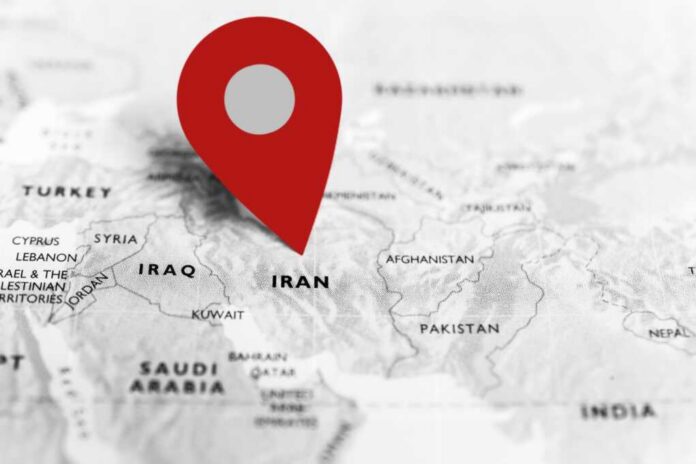
Authorities and regional outlets reported that separate explosions hit Ahvaz in Iran’s oil-rich southwest and Bandar Abbas in the south, a port city with military and commercial importance. In Ahvaz, local safety services attributed the incident to a gas network leak at a residential complex in the Kianshahr neighborhood and said four people were killed. In Bandar Abbas, reports described an explosion in an eight-story building that injured roughly 10 people and damaged vehicles.
Conflicting tallies and incomplete details shaped early coverage. Some reporting described a combined total as high as six dead and more than a dozen injured across the two locations, while other accounts emphasized that the Bandar Abbas blast produced injuries and property damage but no confirmed deaths at the initial reporting stage. Rescue and fire teams were described as active at the scenes, with investigations still developing and no clear public accounting of what substance or mechanism caused the Bandar Abbas explosion.
According to Iranian state media, a gas leak caused an explosion at a residential building in Ahvaz, killing four people and injuring another. pic.twitter.com/VBm8Au3uX1
— Defence Index (@Defence_Index) January 31, 2026
Why Bandar Abbas Raises Regional Security Questions
Bandar Abbas sits near the Strait of Hormuz, one of the world’s most sensitive maritime chokepoints, and it functions as a hub for Iranian commercial shipping and security operations. That geography is why any serious incident there instantly invites wider speculation, even when local officials insist it is accidental. In this case, residents and local witnesses were reported disputing simplistic explanations, including claims that the blast was tied to a gas pipeline, highlighting the credibility problem Iran’s government repeatedly faces.
Iranian state-aligned reporting also focused on tamping down more explosive claims online. One rumor circulating on social media alleged a targeted killing tied to the Revolutionary Guard, but Iranian outlets described those claims as false. With limited independent verification available and Iran’s record of restricting information during crises, outside observers are left weighing competing narratives: an accident consistent with infrastructure decay, or an incident that looks suspicious precisely because the regime tightly polices what can be said publicly.
Aging Infrastructure and the Cost of Regime Mismanagement
Ahvaz lies in Khuzestan province, an industrial region long associated with strained public services and aging energy infrastructure. Reports linked the Ahvaz explosion to a gas network leak, and that explanation fits a recurring pattern in Iran: deadly accidents tied to maintenance failures, underinvestment, and a system that prioritizes regime survival over everyday safety. The sanctions environment is frequently cited as a pressure point, but the consistent throughline is governance that fails basic obligations to citizens.
Instability Context: Protests, Crackdowns, and Post-War Suspicion
The blasts landed amid a broader environment of unrest and tension. Separate reporting described nationwide protests tied to economic distress and a harsh crackdown, alongside information constraints that make verification difficult. Add to that the recent Israel-Iran conflict referenced in coverage, and it becomes easier to see why ordinary people jump to worst-case conclusions when something explodes near a critical port. When governments lie often, citizens stop giving them the benefit of the doubt.
For Americans watching from afar in 2026, the takeaway is less about rumor-chasing and more about hard realities: fragile regimes depend on propaganda, secrecy, and coercion, and that combination breeds instability. Whether these blasts prove to be accidents or something else, Iran’s inability to provide transparent, verifiable answers is itself a warning sign. Strategic locations like Bandar Abbas matter to global shipping and energy markets, and disorder there can ripple outward fast.
Watch the report: Gas leaks blamed for explosions in two Iranian cities – France 24
Sources:
- 4 killed, several injured in explosions in southern, southwestern Iran: Report
- At least 6,126 people killed in Iran’s crackdown on nationwide protests, activists say
- Six dead, over a dozen injured as explosions reportedly rock Iran
- Six dead, over a dozen injured as explosions reportedly rock Iran