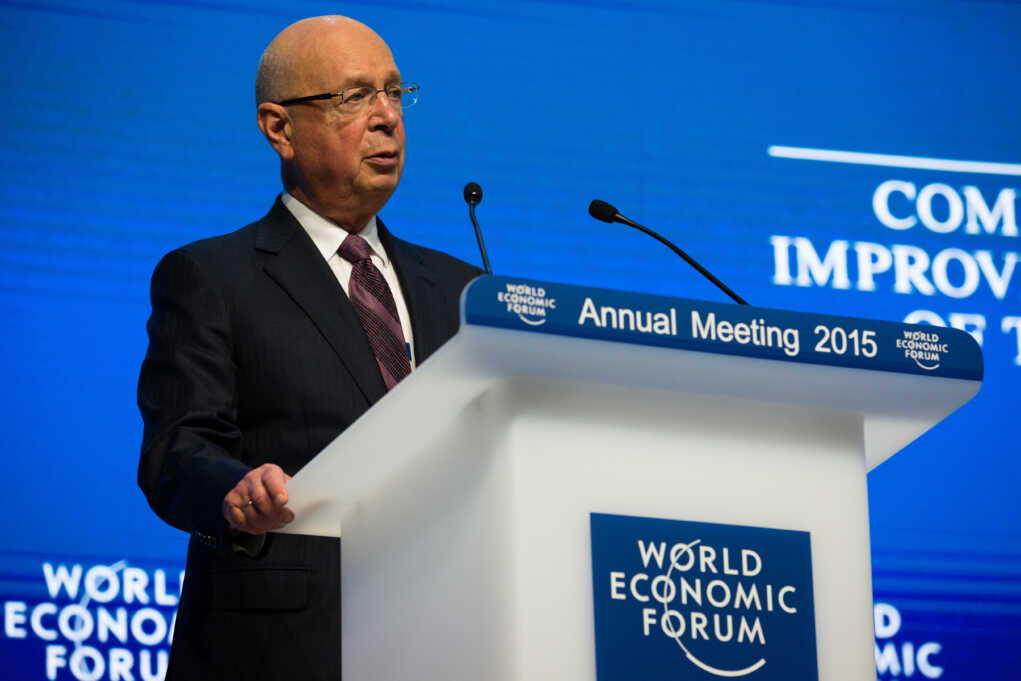
The self-styled “global leadership” class at Davos is once again scrambling to explain why its top CEO was dining with Jeffrey Epstein after his sex-crime conviction.
Quick Take
- The World Economic Forum opened an independent external review into CEO Børge Brende after newly released Epstein files detailed three dinners and 27 messages in 2018–2019.
- Brende previously denied having contact with Epstein in late 2025, then later acknowledged meetings and communications, saying he was unaware of Epstein’s crimes.
- WEF founder Klaus Schwab publicly contradicted Brende’s claim that he informed WEF leadership in 2019, escalating an internal credibility crisis.
- Available reporting says the disclosed exchanges centered on business topics like finance, dinners, and AI, with no evidence presented of criminal conduct by Brende.
WEF launches external review after Epstein-file disclosures
The World Economic Forum confirmed on February 5, 2026 that its audit and risk structures are triggering an independent external review into President and CEO Børge Brende’s interactions with Jeffrey Epstein. The move followed a new tranche of Epstein-related documents made public that reportedly included details of three dinners in New York and 27 emails and text messages between the men in 2018 and 2019. WEF said it would not provide further comment while the review is underway.
The central factual issue is not merely that contact occurred, but that it occurred years after Epstein’s 2008 conviction for sexual offenses. The documents described business-social exchanges, including messages about arranging dinners and at least one note where Brende praised Epstein as a “brilliant host.” Brende has said he was “shocked” by the later revelations about Epstein and expressed regret that he did not do more background checking at the time of the meetings.
WEF, USAID, UN how many members or key figures partied with Epstein? (socializing, dining, associating, or being linked in his network)
Davos forum opens probe into CEO Brende’s Epstein links https://t.co/zpJ3lCkUEE— Hemingwaypaws (@Hemingwaypaws) February 5, 2026
Denial, admission, and a credibility gap at the top
Reporting indicates Brende told a Norwegian outlet in November 2025 that he had not had contact with Epstein, a statement that became harder to defend once the newer documents surfaced. After the disclosures, Brende acknowledged the meetings and messages, presenting them as professional networking and saying he did not know the extent of Epstein’s criminal conduct. That sequence—denial followed by admission—has turned the controversy into a test of leadership judgment and transparency, not just a debate over optics.
Klaus Schwab, WEF’s founder and long-time public face, then sharpened the conflict by disputing Brende’s account of internal disclosure. Schwab reportedly said Brende did not inform him about the Epstein contacts in 2019 and indicated he had not approved any such outreach. That contradiction matters because WEF’s review is expected to focus on what internal steps were taken, who was told, and whether compliance expectations were followed. At minimum, the conflicting statements create a governance problem at an organization built around elite credibility.
What the disclosed messages show—and what they do not
Based on available coverage, the released exchanges describe dinners and general business conversation, including references to finance and artificial intelligence. At least one report emphasizes there is no evidence in the disclosed material that Brende discussed crimes, trafficking, or procuring women. Other reporting adds that U.S. Justice Department materials describe various international links but do not, on their own, establish enough for new prosecutions in many cases. That limitation is important: the documents raise serious questions about judgment and vetting, but they are not presented as proof of criminal wrongdoing by Brende.
Political fallout spreads as Europe’s Epstein links widen
The Brende episode is unfolding alongside broader European reporting about figures and institutions appearing in Epstein-related files, including separate scrutiny in Norway involving diplomatic and public figures. Those parallel developments do not prove any one person’s guilt, but they widen public demands for straightforward answers and consistent standards. In Brende’s case, political pressure has already surfaced, with at least one Norwegian party leader publicly questioning whether his handling of the matter is compatible with leading the WEF.
The immediate next step is the independent review itself—what it defines as “compliance,” what it considers adequate internal disclosure, and whether leadership accounts can be reconciled.
Sources:
Inquiry opened into WEF CEO Brende’s Epstein links
Epstein revelations put WEF top management in a tight spot
Epstein files: Europe’s political elite under scrutiny
Europe in the Epstein files: how far is the continent’s political elite implicated?
Davos forum opens probe into CEO Brende’s Epstein links
Epstein files cite exchanges regarding French president