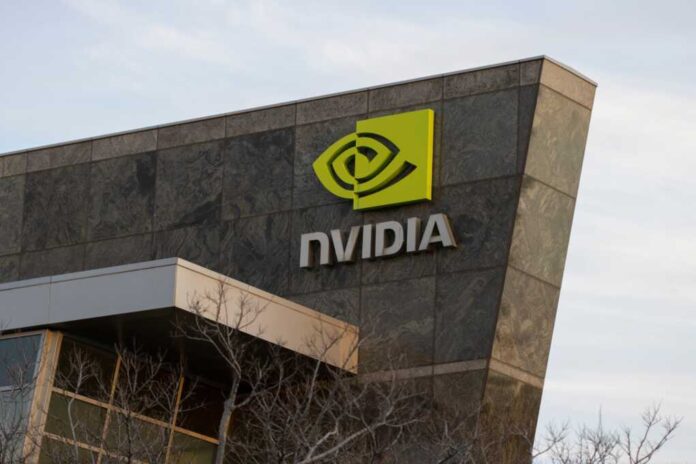
A record wave of insider selling across five major AI companies raises concerns about whether Wall Street’s optimism matches insider confidence.
At a Glance
- PwC estimates AI could add $15.7 trillion to the global economy by 2030
- Nvidia, Palantir, AMD, Meta Platforms, and Microsoft insiders sold over $23 billion in stock in the past five years
- Insider selling has sharply outweighed insider buying since August 2020
- Market caps for leading AI firms remain in multi-trillion-dollar territory despite sales
- Investors are weighing insider behavior against the rapid adoption of AI
The AI Boom Meets Insider Caution
Artificial intelligence has been hailed as the defining innovation of the 21st century. With PwC projecting a $15.7 trillion global contribution to economic output by 2030, demand for AI infrastructure and applications has sent shares of companies like Nvidia, Palantir, AMD, Meta Platforms, and Microsoft soaring. Nvidia alone has reached a market capitalization above $4.3 trillion, fueled by its dominant position in supplying AI-optimized chips.
Yet beneath the market euphoria lies an unmistakable signal: executives and board members across these companies have been consistent net sellers of their own stock. Since mid-2020, insider buying has been virtually absent, suggesting that leadership teams may view valuations as stretched. Over $23 billion in combined insider stock sales across the five firms underscores a pattern that could temper investor enthusiasm.
Watch now: Nvidia Insider Trading ALERT — ‘INSIDERS SELLING…’ · YouTube
Meta Platforms, meanwhile, has shifted billions into AI-driven virtual environments, while its leadership has nonetheless reduced direct equity exposure. Palantir insiders, despite promoting the company’s government and enterprise AI tools, have participated in steady selling since 2020. Advanced Micro Devices, long Nvidia’s rival in the GPU space, and Microsoft, with its sweeping integration of AI into cloud and productivity products, both reflect the same insider-trimmed pattern.
Collectively, these five companies represent the epicenter of Wall Street’s AI growth thesis. Their executives’ trading decisions now raise questions about whether the broader market has priced in more future gains than insiders expect to materialize in the near term.
Market Implications and Investor Outlook
The AI revolution is still in its early chapters, with adoption accelerating across healthcare, finance, manufacturing, and consumer technology. Yet as valuations climb and insider sales mount, investors are faced with balancing long-term optimism against short-term caution signals. A lack of insider buying in particular stands out, as it suggests limited conviction at current prices even from those most closely tied to the technology’s development.
This dynamic is not necessarily predictive of a downturn but serves as a reminder that stock prices often race ahead of fundamentals. The internet’s expansion in the 1990s offers a precedent: while it ultimately reshaped commerce, not all early leaders sustained their valuations through the dot-com cycle. The parallel highlights why Wall Street is paying close attention to what $23 billion of insider sales might be signaling about the sustainability of AI’s market surge.
Sources