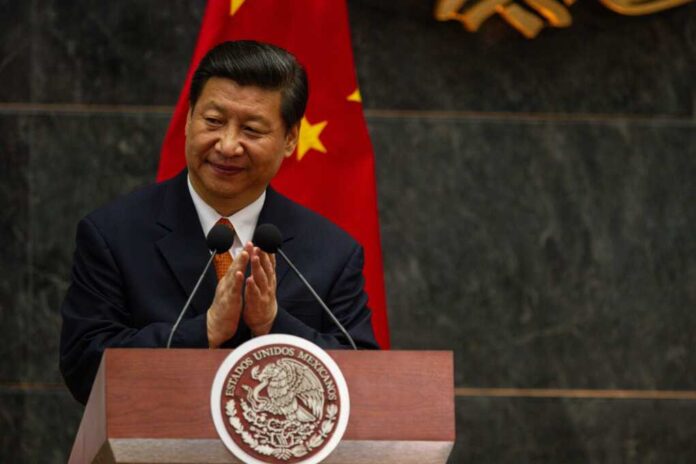
Xi Jinping is quietly steering China into a long-term Cold War-style confrontation with the United States, leveraging economic strategy, global diplomacy, and military restraint to challenge Western dominance.
At a Glance
- Xi is pursuing a “strategic stalemate” inspired by the Soviet Union’s collapse
- China’s “dual circulation” model reduces foreign dependence while preserving global access
- Trade and tech wars have pushed Beijing to develop internal resilience
- The Belt and Road Initiative and Russia alliance are key geopolitical buffers
- Military restraint and economic control are central to China’s power doctrine
A Strategic Cold War By Design
In private speeches and party documents, Xi Jinping has frequently invoked the Soviet collapse as a warning—and a blueprint. Unlike rapid confrontation, he has chosen a calculated path to create what analysts call a “strategic stalemate”: not defeat, not retreat, but controlled equilibrium.
At the core is dual circulation, a two-pronged economic approach that boosts domestic consumption while selectively maintaining foreign trade. This allows Beijing to buffer itself from external shocks while still projecting influence through global markets. Xi’s alignment with Russia and his expansion of the Belt and Road Initiative provide geopolitical ballast in Asia, Africa, and Eastern Europe.
Watch a report: Xi Jinping’s Long-Term Cold War Strategy Against the U.S.
Trade Tensions and Technocratic Control
The U.S.–China trade war—ignited under Trump and expanded by Biden—accelerated China’s strategic decoupling. While some concessions have been made, such as the U.S. recently lifting software and ethane trade curbs, the larger strategy remains intact: China aims to reduce its reliance on Western tech and capital.
This pivot includes rigid regulatory control over private enterprise, increased subsidies for national tech champions, and the strengthening of state-run industries. But this consolidation may dampen innovation and slow domestic growth, especially as youth unemployment and consumer confidence waver.
Global Stakes of Xi’s Playbook
Xi’s strategy rests not on an arms race but on institutional endurance. The military buildup is steady but disciplined, avoiding reckless escalations. Beijing is betting it can outlast Western pressure by absorbing blows and pushing forward economically.
As China tests rare-earth export controls and reconfigures global supply chains, its efforts to rebalance global influence may redefine the international order. Xi isn’t rushing toward conflict—he’s playing for the long game, one bureaucratic move at a time. Whether that strategy succeeds depends on whether the U.S. is prepared to match patience with precision.