Tulsi Gabbard’s blistering debut as Director of National Intelligence signals a direct confrontation with Washington’s entrenched intelligence elite.
At a Glance
- Tulsi Gabbard accused former DNI James Clapper and ex-CIA chief John Brennan of politicizing intelligence.
- Her confirmation as DNI marks a major shift in Trump’s second-term personnel strategy.
- Gabbard emphasized constitutional principles and accountability in her speech.
- Debate continues over the politicization and oversight of the U.S. intelligence community.
A Direct Challenge to the Intelligence Old Guard
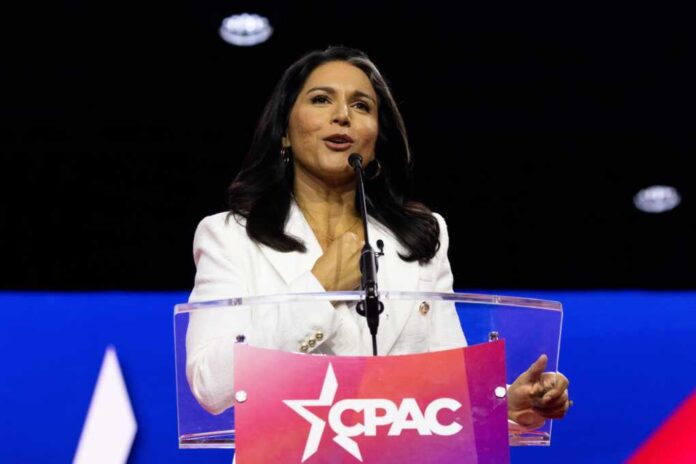
On September 3, 2025, Tulsi Gabbard delivered her first major speech as the newly confirmed Director of National Intelligence at the National Conservatism Conference in Washington, D.C. Her remarks took direct aim at two of her predecessors, James Clapper and John Brennan, whom she accused of using their positions to politicize intelligence assessments against former President Donald Trump. By explicitly naming them, Gabbard broke with the tradition of nonpartisan restraint typically observed by intelligence officials, marking a sharp departure in tone and leadership style.
Watch now: Tulsi Gabbard Revokes Security Clearances: 37 Intelligence Officials Accused of Politicization
The Office of the Director of National Intelligence was created in 2004 to improve interagency coordination after the failures that led to 9/11. Yet nearly two decades later, it remains at the center of debates over credibility and politicization. Gabbard’s ascension as a former Democrat, military veteran, and woman of color adds an outsider dimension to her reform agenda, placing her squarely at odds with an intelligence establishment deeply rooted in post-9/11 bureaucratic structures.
Breaking With Tradition
Gabbard’s criticism of former intelligence leaders is part of a wider conservative effort to rein in what many describe as “deep state” overreach. Her decision to revoke security clearances for dozens of former officials reflects a willingness to confront not just past controversies but also current practices. For supporters, this approach promises accountability; for critics, it risks undermining professional independence within the intelligence community.
Historically, disputes over intelligence assessments—from the justification for the Iraq War to reports on Russian election interference—have fueled accusations of politicization. By invoking this history, Gabbard is positioning herself as a reformer intent on breaking cycles of bias, but also as a polarizing figure in an already divided political landscape.
The Road Ahead for U.S. Intelligence
The implications of Gabbard’s leadership extend beyond personnel changes. In the short term, her stance could create friction inside the intelligence community, with morale and internal trust potentially strained by perceptions of political loyalty tests. In the long term, the reforms she proposes could either usher in an era of transparency and constitutional grounding or deepen the very politicization she seeks to end, depending on how reforms are executed and overseen.
Reactions to her appointment remain sharply divided. While Trump-aligned conservatives and libertarians have praised her for confronting entrenched power, critics argue her alignment with Trump’s worldview risks eroding nonpartisan credibility. Some intelligence veterans defend the integrity of the community’s work, while figures like former CIA Counterterrorism Chief Bernard Hudson have publicly supported Gabbard’s judgment and integrity.
Her tenure begins at a moment of heightened scrutiny over surveillance, privacy, and civil liberties, placing her in a pivotal role at the intersection of national security and democratic accountability. Whether her bold debut marks a genuine turning point or an intensification of partisan battles within intelligence remains the defining question of her directorship.
Sources