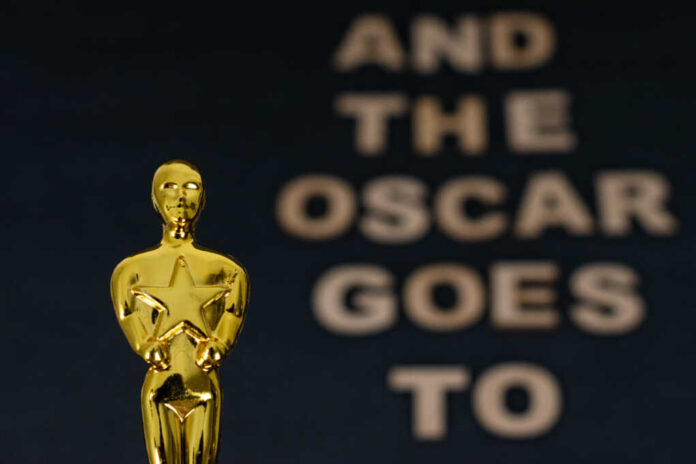
Jack Nicholson nearly skipped the Oscars that would define his career, but half a century later, the same elites who now trade in orthodoxy are hailing a film that once dared to spit in authority’s face.
At a Glance
- “One Flew Over the Cuckoo’s Nest” marks 50 years with a nationwide 4K re-release and cast celebrations.
- The film’s Oscar sweep in 1976 shattered records, winning the “Big Five” Academy Awards.
- Michael Douglas and Danny DeVito reflect on the film’s legacy and the risk-taking that made it possible.
- The movie’s enduring message about the dangers of unchecked authority resonates more than ever in today’s climate.
A Hollywood Classic Turns 50—And the Irony Runs Deep
It’s 2025, and Hollywood is throwing itself a party for a film that once dared to challenge everything the industry now embodies. The re-release of “One Flew Over the Cuckoo’s Nest” isn’t just a nostalgic victory lap—it’s a monument to an era when storytelling meant taking risks, not parroting safe narratives. Set for national re-release this month with a 4K restoration, the anniversary edition arrives with an introduction by critic Leonard Maltin and a sheen of reverence that borders on revisionist.
Watch a report: One Flew Over the Cuckoo’s Nest.
Producer Michael Douglas, who shepherded the film to screens after inheriting the rights from his father, recently shared memories of the film’s production—stories filled with improvisation, grit, and an almost punk-rock disregard for convention. Alongside co-star Danny DeVito.
Douglas described a shoot grounded in authenticity: filming at the Oregon State Hospital, the same site where the story takes place, and housing the cast in a modest local motel. That kind of seat-of-your-pants filmmaking would never survive today’s corporate chokehold. In an era of “content strategy” and “sensitivity readers,” the movie’s very existence feels like a rebellion.
The Reluctant Oscar Night That Changed Everything
By 1976, Jack Nicholson was already a familiar face at the Oscars—and a familiar loser. Five nominations, five snubs. That’s why, on the night of the 48th Academy Awards, Nicholson nearly stayed home. But Douglas convinced him to attend, and the film went on to do what hadn’t been done since “It Happened One Night” in 1934: it swept the “Big Five”—Best Picture, Director, Actor, Actress, and Screenplay.
Nicholson’s smoldering performance as Randle McMurphy secured his legend, and Louise Fletcher’s chilling portrayal of Nurse Ratched became one of cinema’s most iconic villains. Behind the camera, director Miloš Forman cemented himself as a visionary unafraid of institutional critique. And Douglas, the producer who gambled on a grim novel about mental health and resistance, emerged as a force willing to put principle over PR.
The impact was immediate and colossal. The film’s success showed that Americans weren’t hungry for platitudes—they wanted truth, raw and unvarnished. Today, that spirit feels all but extinct in an industry obsessed with likes, hashtags, and ideological compliance.
Legacy of Rebellion: Still Relevant, Still Resisted
Half a century later, the themes of “Cuckoo’s Nest” still cut like a scalpel. The Oregon State Hospital, once just a backdrop, became a symbol of a broken mental health system still failing millions. And while the names and uniforms have changed, the Nurse Ratcheds of the world are more ubiquitous than ever—dressed not in starched whites, but in bureaucratic doublespeak, DEI audits, and corporate manifestos.
The film remains enshrined in the National Film Registry, its reputation untouched by the moral fads of the moment. Scholars and critics continue to hail its blend of gritty realism and institutional critique, noting how its unflinching focus on individual autonomy has only grown more urgent. Yet in a Hollywood that now equates questioning authority with disloyalty, the film’s message lands with a bitter aftertaste: it’s a celebration of a kind of courage that modern cinema no longer permits.
And that’s the final, devastating irony: we honor the rebels of the past—so long as no one tries to follow their lead.