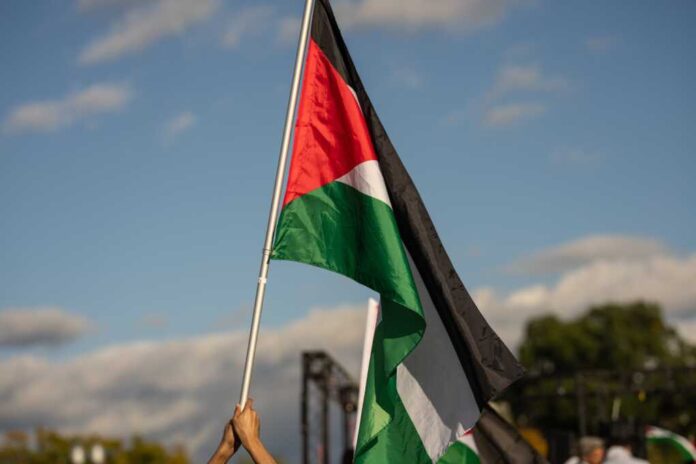
Massive European protests herald a growing challenge to traditional alliances, as hundreds of thousands rally for Palestinian rights amidst escalating Middle Eastern tensions.
Story Highlights
- Hundreds of thousands join pro-Palestinian marches across Europe.
- Protests coincide with heightened US-Iran tensions and the Gaza flotilla interception.
- European governments face increased pressure to alter foreign policy.
- Demonstrations highlight dissatisfaction with current Middle East strategies.
European Cities Erupt in Solidarity with Palestinians
In early October 2025, major European capitals witnessed an unprecedented wave of pro-Palestinian demonstrations, with hundreds of thousands demanding an end to the conflict in Gaza. This mass mobilization reflects growing discontent with current Middle Eastern policies and calls for a fresh approach to diplomatic relations. The protests were sparked by recent US military actions against Iranian sites and the interception of a Gaza-bound flotilla by Israeli forces.
The demonstrations, which occurred in cities such as London, Berlin, Bern, and Paris, were organized by grassroots groups, student organizations, and trade unions. Protesters are urging European governments to stop arms sales to Israel and to increase humanitarian aid for Gaza. Despite the scale of the protests, some reports noted occasional clashes with police, particularly in Italy and France, but the majority of the events remained peaceful.
Hundreds of thousands turn out at pro-Palestine marches across Europe, demanding immediate ceasefire in Gaza and the release of flotilla activists trying to get aid to enclave.
— in pictures https://t.co/V4QrUyu3NB pic.twitter.com/cuUqqcLTyp
— Al Jazeera English (@AJEnglish) October 5, 2025
Historical Context and Current Developments
The roots of these protests can be traced back to the long-standing Israeli-Palestinian conflict, which saw a new escalation in 2023 when war broke out between Israel and Hamas. This has led to significant civilian casualties and a humanitarian crisis, fueling international outrage and solidarity movements. In recent months, the situation has been exacerbated by US-Iran tensions and high-profile incidents like the Gaza flotilla interception.
Protesters have been vocal about their demands for an immediate ceasefire and have called on European leaders to take more decisive action. The scale and persistence of these protests have put pressure on European governments, who are balancing public opinion with international diplomatic and security concerns.
Impact and Implications for European Policy
The implications of these protests are multifaceted. In the short term, they have increased public pressure on European policymakers and heightened the visibility of the Palestinian cause. This could lead to policy debates on arms sales and humanitarian aid, as well as potential shifts in foreign policy. In the long term, sustained activism could influence upcoming elections and diplomatic initiatives, prompting a reevaluation of Europe’s role in Middle Eastern affairs.
While the demonstrations have fostered solidarity among diverse groups, they have also increased polarization, with potential for heightened intercommunal tensions within Europe. Economically, there are calls for boycotts and divestment from companies linked to the conflict, while politically, the protests have placed additional scrutiny on European leaders, compelling them to navigate a complex landscape of public sentiment and international alliances.
Watch the report: Hundreds of thousands rally around the world to support Palestinians • FRANCE 24 English
Sources: