Senator Rand Paul’s insistence that President Donald Trump must seek congressional approval before any military confrontation with Venezuela has revived a long-standing constitutional debate over who holds the power to send American troops into combat. His warning challenges executive overreach and speaks to a conservative base weary of globalist foreign policy and costly, endless interventions, underscoring that constitutional checks on power are anti-unchecked bureaucracy.
Story Highlights
- Sen. Rand Paul publicly argued that President Trump must seek congressional approval before going to war with Venezuela.
- The comments highlight long-running battles over who controls U.S. war powers: the White House or Congress.
- Conservatives see both a safeguard for the Constitution and a potential leash on Trump’s America First foreign policy.
- The Venezuela debate reflects broader frustration with endless wars, regime-change schemes, and Beltway globalism.
Rand Paul’s Warning on War Powers and Venezuela
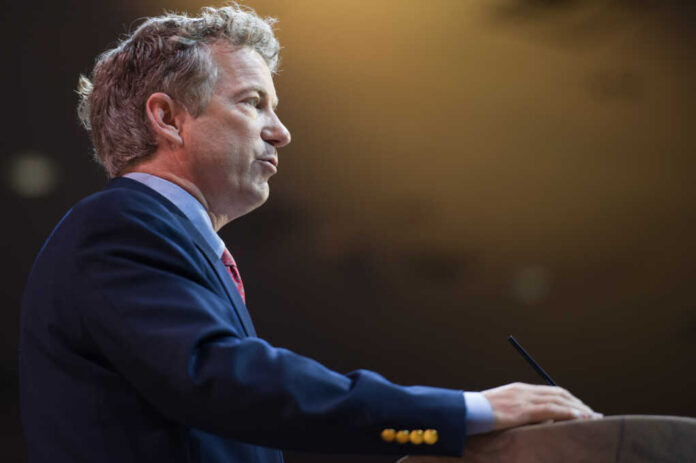
On Fox News Channel’s “America Reports,” Kentucky Senator Rand Paul stated that President Donald Trump would have to “ask for permission from Congress” before going to war with Venezuela, reviving a long-simmering argument over who holds the true power to send Americans into combat. Paul, a limited-government constitutional conservative, framed the issue in terms of Congress’s sole authority to declare war, pushing back on any rush toward another foreign entanglement in Latin America.
Paul’s comments came as some voices in Washington floated military options against Nicolás Maduro’s socialist regime, which has driven Venezuela into economic collapse and mass migration. For many conservatives, Maduro’s ruthless leadership is undeniable, but so is the painful memory of past interventions that morphed into endless, costly occupations. Paul’s insistence on congressional approval challenged hawks who want a freer hand for the executive branch while speaking to voters tired of paying for global experiments.
“It sounds a lot like the beginning of a war” Sen. Rand Paul says in reaction to news that the U.S. seized a Venezuelan oil tanker. He argues President Trump needs to ask Congress for approval. pic.twitter.com/EceaDD84dr
— Hannah Brandt (@HannahBrandt_TV) December 10, 2025
Constitutional Limits Versus Executive Power
The U.S. Constitution clearly assigns Congress the power to declare war, yet modern presidents from both parties have relied on broad authorizations and executive claims to deploy troops abroad without fresh votes. Paul’s argument placed him squarely in the camp defending a strict reading of Article I, warning that bypassing Congress corrodes checks and balances. For Trump supporters who value the rule of law, the question is how to defend that principle without undermining a president they believe finally puts America First.
Many conservative voters remember how previous administrations used vague authorizations to justify mission creep across the Middle East, often with little debate and even less accountability. That history fuels skepticism toward any new campaign framed as humanitarian or democratic nation-building. By demanding a congressional vote, Paul effectively told the permanent foreign policy class that they could no longer treat U.S. troops as instruments for global social experiments. His stance underscored that proper war powers are not anti-Trump, but anti-unchecked bureaucracy.
Venezuela, Globalism, and the Cost of Intervention
Venezuela’s crisis is a stark warning about what happens when socialism and corruption replace free markets and stable institutions. Years of price controls, expropriations, and state-run schemes wrecked an oil-rich nation, driving families into poverty and pushing millions to flee across borders. Yet the same global elites who ignored Venezuela’s warning signs now pressure Washington to “fix” the problem, often with the same mindset that dragged the United States into expensive, open-ended commitments in Iraq and Afghanistan.
For conservatives bruised by inflation, border crisis, and crumbling communities at home, the idea of pouring billions into another overseas project rings hollow. They question how Washington can justify nation-building in Caracas while American cities struggle with crime, addiction, and broken infrastructure. Paul’s call for congressional permission functions not only as a legal requirement but also as a practical brake, forcing members of Congress to answer directly to voters before risking American lives and treasure in another far-off conflict.
Trump’s America First Base and the Anti-War Right
Trump’s political rise tapped deep anger at globalist policies that sacrificed American workers, families, and soldiers in favor of foreign interests and elite agendas. His voters wanted secure borders, strong trade deals, and respect for U.S. sovereignty, not fresh interventions designed by think tanks and lobbyists. Within that movement, figures like Rand Paul represent a powerful current: strong on national defense, yet fiercely opposed to using U.S. power for open-ended regime-change or ideological crusades abroad.
By insisting Trump seek congressional approval on Venezuela, Paul effectively reminded the America First coalition that defending the Constitution is part of defending the country. Limited government does not stop at domestic regulation; it also restrains how and when Washington goes to war. For conservative readers, the Venezuela debate is not only about one country, but about whether the post-Trump era truly breaks with the old globalist habit of endless intervention—or quietly slips back into it.
Watch the report: Sen Rand Paul: Trump must go through Congress if he wants to go after Maduro
Sources:
Rand Paul: Trump boat strikes ‘prelude to an invasion of Venezuela’
New House, Senate attempts to preempt war with Venezuela | Responsible Statecraft
US lawmakers voice concerns about Venezuelan tanker seizure: ‘sounds a lot like the beginning of a war’ – US politics live