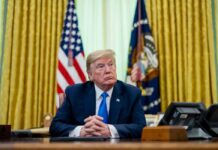
U.S. President Donald Trump is considering military strikes against drug cartels operating inside Venezuela, signaling a potential escalation in U.S. actions amid an ongoing regional standoff.
At a Glance
- President Trump is evaluating military options to strike cartel targets inside Venezuelan territory as part of a wider anti-narcotics campaign
- The U.S. carried out a strike on September 2, sinking a boat in the southern Caribbean and killing 11 alleged cartel members
- Ten F-35 stealth fighter jets are being deployed to Puerto Rico to support further operations in the region
- Venezuelan President Nicolás Maduro has denounced the buildup as a violation of sovereignty and mobilized local militias in response
Background: U.S. Strike and Military Buildup
On September 2, U.S. forces carried out a strike on a vessel in the southern Caribbean alleged to belong to the Tren de Aragua cartel. The boat was reportedly transporting narcotics, and 11 individuals were killed, according to U.S. officials. Independent verification of the incident remains limited, though Washington described the strike as a necessary measure in its ongoing anti-cartel campaign.
This operation was the first major use of force since the administration launched a new regional initiative targeting narcotics networks. The U.S. has deployed several warships and approximately 4,000 troops to the Caribbean since August, underscoring the scale of the campaign and the administration’s willingness to commit military assets to the effort.
Watch now: US–Venezuela Standoff Deepens, As Trump Sends Jets And Weighs Strikes • FRANCE 24 English
Rising Tensions: From Puerto Rico to Cartel Strongholds
On September 5, the U.S. ordered the deployment of 10 F-35 fighter jets to Puerto Rico. Defense officials stated the move would strengthen operational readiness against trafficking networks and reinforce deterrence in the Caribbean basin. The advanced aircraft provide Washington with the capability to conduct precision strikes if ordered.
Reuters and other outlets confirmed that Trump is now weighing potential strikes on cartel operations inside Venezuela itself, a significant expansion from maritime interdictions to possible incursions into sovereign territory. Such a step would mark a shift in U.S. tactics, raising questions about the extent of presidential authority and the risks of direct confrontation with Caracas.
International Reaction and Legal Concerns
Venezuelan President Nicolás Maduro sharply criticized the U.S. buildup, calling it a threat to national sovereignty. He urged Venezuelans to mobilize and warned that any U.S. incursion would be met with armed resistance. Maduro’s government has placed militia forces on alert and accused Washington of using counternarcotics policy as a pretext for broader intervention.
Legal experts and international observers have also raised questions over the legitimacy of U.S. actions. While the White House maintains that narcotics trafficking constitutes a direct threat to national security, international law generally restricts the use of force within another country’s borders absent consent or a U.N. mandate. Analysts warn that an escalation could trigger diplomatic fallout across Latin America, where many governments are wary of unilateral U.S. military moves.
Sources